• Skip to primary navigation
  • Skip to main content

Center for Infrastructure, Transportation, and the Environment (CITE)

Rensselaer Polytechnic Institute SEARCH
School of Engineering
Center for Infrastructure, Transportation, and the Environment (CITE)
  • About Us
  • Team
  • News
  • Training & Outreach
  • Research
  • Software & Tools
  • CoE-SUFS
    • Peer-to-Peer Exchange Program
  • Contact Us

Jeff Wojtowicz

Informed Consent

December 4, 2024 By Jeff Wojtowicz

Informed Consent to Participate in Social/Behavioral Research

OVERVIEW

Description

Researchers at the Center for Infrastructure, Transportation and the Environment (CITE) at Rensselaer Polytechnic Institute, are conducting a research study to gain insights into the current freight activity patterns of carrier companies in the United States; to identify their perceptions regarding the use of battery electric trucks, and to determine key purchasing factors. This will help identify the likely usage scenarios for a new Class 8 battery electric vehicle truck technology.

If you are interested in additional information about the project, click here.

Methods

Your participation consists of a 10-15 minute survey, during which you will be asked questions regarding the freight operations within your company.

Risks and Benefits

The risks associated with this study are minimal, as your answers are based on your own experience or opinion and the results will be confidential. Your participation in the study is crucial to its success. By sharing your opinions, the research team can gain a better understanding of the main freight activity patterns and perceptions regarding battery electric trucks across the United States.

Payments

Your participation in this survey is voluntary. If you complete the survey and meet the requirements, you will have the opportunity to receive an Amazon gift card.

Participant’s Rights

Your participation is voluntary, and you have the right to terminate the survey at any time; in this case, you waive your right to the possibility of receive payment.

Data Collection and Use

Your name or other identifying information will not be publicly shared or included in published materials, no statements will be directly attributed to you. The results of this research, including anonymous quotes, may be presented at scientific or professional meetings, published in scientific journals, or otherwise shared with the general public.

Data Privacy and Security

The data collected will only be accessible to authorized team members, and will be stored in password protected servers, and/or locked cabinets.

Contact Information

For further information about this research, please contact:

  • Dr. José Holguín-Veras, Rensselaer Polytechnic Institute, JEC 4030, 110 8th Street, Troy, NY 12180, Phone 518-276-6221, Email: FreightResearch@rpi.edu
  • Chair, Institutional Review Board, Rensselaer Polytechnic Institute, CII 9015, 110 8th Street, Troy, NY 12180 Phone: 518- 276-4873. irb@rpi.edu.

SuperTruck 3

August 15, 2024 By Jeff Wojtowicz

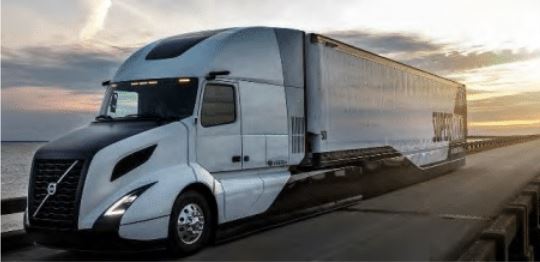
SuperTruck 3 - Zero Emission Freight Future

START YEAR: 2022

COMPLETION YEAR: 2027 (estimated)

PRIMARY CONTACTS:

  • José Holguín-Veras (PI)
  • Cara Wang
  • Sean He
  • Jeffrey Wojtowicz

RESEARCH PARTNERS:

  • Volvo Group 
  • Oak Ridge National Laboratory

SPONSORS/FUNDING:

  • US Department of Energy

OVERVIEW

The SuperTruck 3 – Zero Emission Freight Future (ST3) project has the ultimate objective of developing a Class 8 battery electric vehicle (BEV) that meets the specific range, power, charging, energy, and cost requirements needed for effective introduction into the BEV market. By studying baseline conditions along the Interstate 81 (I-81) Corridor between Dublin, Virginia and Macungie, Pennsylvania, the team at RPI will determine likely use scenarios for BEVs – specific industry sectors, origin-destination pairs, etc. that will benefit the most from the use of BEVs. In addition to the I-81 Corridor, the team will study the baseline conditions within the boundaries of the Chattanooga – Hamilton County Regional Planning Agency (CHCRPA) – the metropolitan planning organization (MPO) for the Chattanooga, Tennessee area. This two-pronged approach allows for the development of corridor and vehicle choice models to evaluate these likely use scenarios.

Using the data from the I-81 Corridor, the team at RPI will combine previously studied Freight Origin-Destination Synthesis (FODS) techniques to develop a corridor freight model. FODS techniques use publicly available data as inputs to produce predictions of freight activity within a study area. A vehicle choice model, either econometric or supply-chain-based, will be developed in tandem with this FODS model. This vehicle choice model will work to support the analysis needed to design the proposed Class 8 BEV. To analyze urban delivery patterns, RPI’s Behavioral Micro-Simulation (BMS) model framework will be applied. The nature of the selected model frameworks for this project enables prediction of freight flow patterns and vehicle choice patterns under different economic and technology adoption scenarios.

ADDITIONAL INFORMATION

  • Project Presentation from the 2023 USDOE VTO Annual Merit Review
  • Project Presentation from the 2024 USDOE VTO Annual Merit Review

RELATED PROJECTS

  • USDOE: Collaborative Approaches to Foster Energy Efficient Logistics in the I-87 Corridor
  • USDOT: Off-Hour Delivery Program

Off-Hour Delivery Guidebook

September 19, 2023 By Jeff Wojtowicz

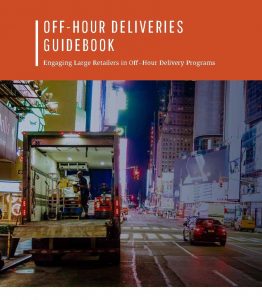
Off-Hour Delivery Guidebook - Engaging Large Retailers in Off-Hour Delivery Programs

COMPLETION YEAR: 2023

TOPIC(S): Urban Freight 

PRIMARY CONTACT(S):

  • Jeff Wojtowicz
  • Jose Holguin-Veras

PARTNER(S):

  • SBI Strategies

SPONSORS/FUNDING:

  • Federal Highway Administration (FHWA)

OVERVIEW

This Guidebook was developed with the purpose to advance knowledge on how best to foster off-hour delivery (OHD) programs in urban areas, with a particular focus on large retailers. The Guide discusses the key details the processes and partnerships that are essential to the implementation of OHD, and covers the basic concepts that are fundamental to off-hour delivery programs and their implementation. As such, it includes key concepts, the benefits of OHD, stakeholder outreach and coordination, specific applications to large retailers, strategies and technologies to support OHD, steps for conducting OHD, and details for long-term implementation and sustainability.

While the Guide can be used by any entity interested in developing an OHD program, it focuses primarily on large retailers. Studies, as well as practical applications, have shown large businesses within the retail and food industries to be more willing to include an OHD program as a part of their operations. Targeting these businesses with multiple locations, typically in multiple cities, will therefore result in more efficient use of resources, leading to an increased success rate for long-term program implementation.

EMPHASIS ON LARGE RETAILERS

For this Guidebook, large retailers are considered convenience stores, grocery chains, restaurants, coffee shops
and retail chains that have a large number of locations in a city. The emphasis on large retailers is warranted on
the basis of multiple reasons and these multiple considerations led the team to produce this Guidebook:

  • Large retailers typically operate multiple stores in the same metropolitan area, convincing them to adopt OHD
    could lead to reductions of freight traffic and emissions in multiple locations.
  • The possibility of having multiple locations accepting OHD drastically increases the feasibility of OHD as it
    makes it easier for freight carriers to replace regular-hour delivery routes entirely.
  • Large retailers are typically interested in being perceived as responsible corporate citizens and good stewards
    of the environment that support environmentally friendly delivery practices such as OHD.
  • Large retailers—because of their stature and prominence—have a great deal of influence on their peers; as a
    result, their adoption of OHD is likely to inspire other businesses to follow suit.
  • Large retailers frequently operate in multiple cities and parts of the country, their adoption of OHD is bound to
    facilitate the spread of OHD across the country.

SUMMARY

The superior performance of OHD programs is the direct result of the collaborative nature of the effort, where
both public and private sector collaborate to achieve outcomes impossible to reach unilaterally by either sector.
The research conducted by Rensselaer clearly indicates that, if fully funded, an unassisted OHD program could
move 20-40% of the freight deliveries out of the day hours. To achieve this it is important to engage these large
national and regional chains in off-hour delivery practices so they can grow the base of participating companies.
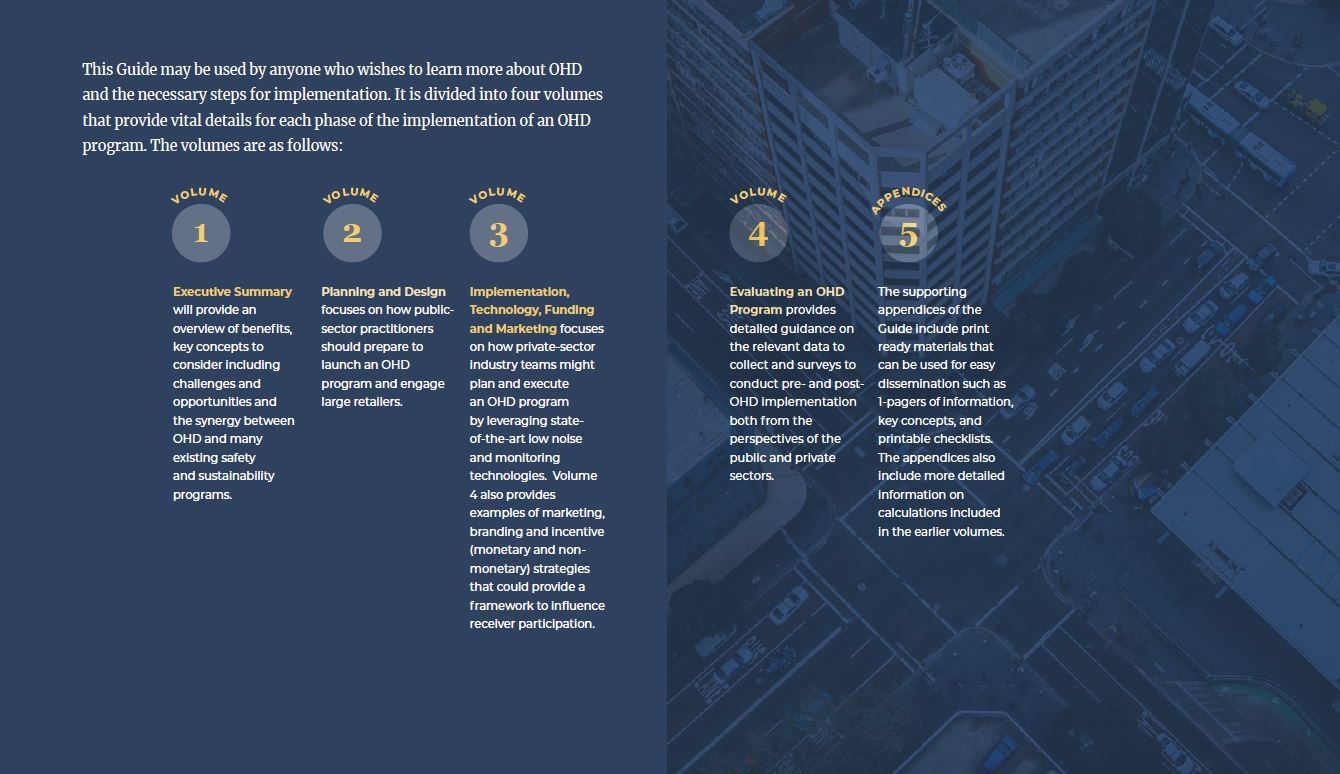
This Guide is divided into four volumes including 1) Introduction to Engaging Large Retailers in OHD Programs,
2) Planning, Design and Implementation of an OHD Program, 3) Implementation, Analyses and Technologies
to Support OHD Programs, and 4) Evaluating an OHD Program. Each volume is intended to be used by either
the public or private sector to provide information on how to provide insight on how to foster off-hour deliveries
amongst these large retailers.

KEY PRODUCTS

  • Complete Guidebook

CONTRIBUTING TEAM MEMBERS

  • Jeff Wojtowicz
  • Jose Holguin-Veras
  • Stacey D. Hodge
  • Shama Campbell
  • Oriana Calderon
  • Diana Ramirez-Rios
  • Julia Coutinho Amaral
  • Cara Wang

Energy Efficient Logistics

October 2, 2020 By Jeff Wojtowicz

CLICK HERE TO PARTICIPATE IN THE SURVEY ABOUT ENERGY EFFICIENCY IN SUPPLY CHAINS

Collaborative Public-Private Sector Approaches to Foster Energy Efficient Logistics in the NYC-Albany Corridor

START YEAR: 2017

COMPLETION YEAR: 2022 (estimated)

PRIMARY CONTACTS:

  • José Holguín-Veras,
  • Jeffrey Wojtowicz

RESEARCH PARTNERS:

  • Argonne National Laboratory
  • George Mason University

SPONSORS/FUNDING:

  • US Department of Energy

ADVISORY GROUP MEMBERS

OVERVIEW

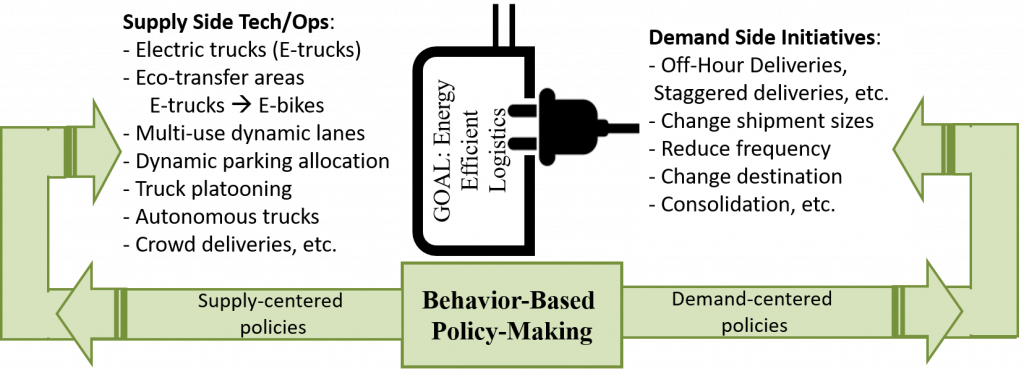
Rensselaer Polytechnic Institute (RPI) is leading the “Energy Efficient Logistics: Behavior-Based Policymaking at NYC-Albany Corridor” in collaboration with Argonne National Laboratory, George Mason University and multiple public and private sector organizations operating in the Albany and NYC regions. This project would be led by Dr. Jose Holguin-Veras at RPI.  This proposed living lab will: (1) fully exploit behavior-based policymaking approach developed by the team during the NYC Off-Hours Delivery project to reduce the energy consumption of freight activity; (2) design and pilot test Energy Efficient Logistics (EEL) initiatives to simultaneously reduce energy use and emissions, increase profits, and improve quality of life. This high priority work will focus on the vital, yet often neglected, freight sector, with an innovative approach that will yield significant reductions in energy use. A powerful feature of the behavior-based policymaking approach is its business friendly nature. The private sector will be an ally.

ADDITIONAL INFORMATION

KEY FINDINGS

  • Results from an online survey, implemented by the team on June 2019 to more than 500 frequent e-commerce shoppers, show how delivery lockers and delivery consolidation (delivering multiple orders at the same time) are the strategies with the most acceptance among shoppers to improve sustainability of e-commerce deliveries.
  • Traffic simulations show that if ports extended their working hours and stagger the arrival of freight vehicles coming to load and unload, there would be a reduction in fuel consumption to all the vehicles that travel through the area of the port.
  • Analysis of an extensive GPS data base of freight vehicles show that vehicles traveling in the New York City metro area emit more pollutants per mile traveled than in the corridor or Capital District. Between, the three geographical areas, the Capital District is the area where freight vehicle are less pollutant.
  • A new energy efficiency framework was designed to consider the unique aspects of logistics. Six determinants were identified as key
    factors for characterizing energy efficiency. (1) Network level efficiency, (2) demand level efficiency, (3) mode/vehicle choice efficiency,(4) routing efficiency, (5) traffic and/or driving efficiency and (6) vehicle efficiency.
  • Synergy between energy efficiency logistic initiatives can be exploited to exacerbate the potential benefits each initiative has while reducing the adverse effects. For example, a combination of Off-Hour Deliveries (OHD) with electric vehicles is ideal because noise pollution concerns of OHD are reduced with the usage of electric vehicles. At the same time, operational concerns of electric trucks diminish in the off-hours where delivery routes are shorter and more efficient. A virtuous cycle among energy efficiency strategies is the preferred outcome.
  • A Behavioral Microsimulation that models all freight vehicle activity in the Capital District indicate that locating distribution centers closer to the core of the metropolitan area generates less vehicle miles traveled than locating them in the outskirts of the area.

For detailed information about the tasks of the project click on the following links:

  • Catalog of Initiatives and Energy-Efficiency Framework
  • Behavioral Microsimulation (BMS)
  • Port Simulation
  • Baseline Conditions of Emissions and Fuel Consumption
  • Behavioral Modeling

RELATED PROJECTS

  • Off-Hour Delivery Program

report01-02-02-1

August 14, 2020 By Jeff Wojtowicz

Page Title Goes Here

This Template includes 7 Inner Sections

Each of these Inner Sections can be Duplicated and reorganized (to Duplicate an Inner Section, right-click on it within Navigator menu, and to move it, simply drag-and-drop it within the Navigator menu) 

The first Inner Section is the Heading with the Page Title

Inner Sections 2-4 are the main building blocks that can be Duplicated as needed to create the entire page 

Inner Section 2 is a full-width Inner Section, which contains the current Text Editor 

Inner Section 3 is a 20px Spacer 

Inner Section 4 is a 2-Column Inner Section, and the Text Editors have 10px of Padding on all sides

The remaining 3 Inner Sections (a 20px Spacer, a 2-Column Inner Section with Buttons, and a 50px Spacer) can remain at the bottom of the page, though the Button links need to be updated (by default, they link to the Introduction section)

The settings for the menu on the right can be found at the bottom of the Navigator, and this only requires selecting the appropriate menu from the drop-down options

To add a Template such as this one to a blank page, click the grey Folder icon found in the middle of the box that says “Drag widget here”, and then select the desired Template 

Left column

Right column 

Previous
Next
  • FELU-Guide
  • report01-01-top-level
  • report01-02-top-level
    • report01-02-01
    • report01-02-02
      • report01-02-02-1
  • report01-03-top-level
  • report01-04-top-level
  • report01-05-top-level
  • report01-06-top-level
  • report01-07-top-level
  • report01-08-top-level
  • report01-09-top-level
  • report01-10-case-studies-top-level
  • report01-appendix-a
  • report01-appendix-b
  • report01-appendix-c
  • report01-appendix-d
  • report01-appendix-e
  • report01-appendix-f
  • report01-appendix-g
  • report01-references

report01-02-02

August 14, 2020 By Jeff Wojtowicz

  • Go to page 1
  • Go to page 2
  • Go to page 3
  • Interim pages omitted …
  • Go to page 5
  • Go to Next Page »

Copyright © 2026 Rensselaer Polytechnic Institute (RPI)

Media Policy    |    Web Privacy Policy    |    Student Consumer Information    |    Title IX Policy    |    Accessibility